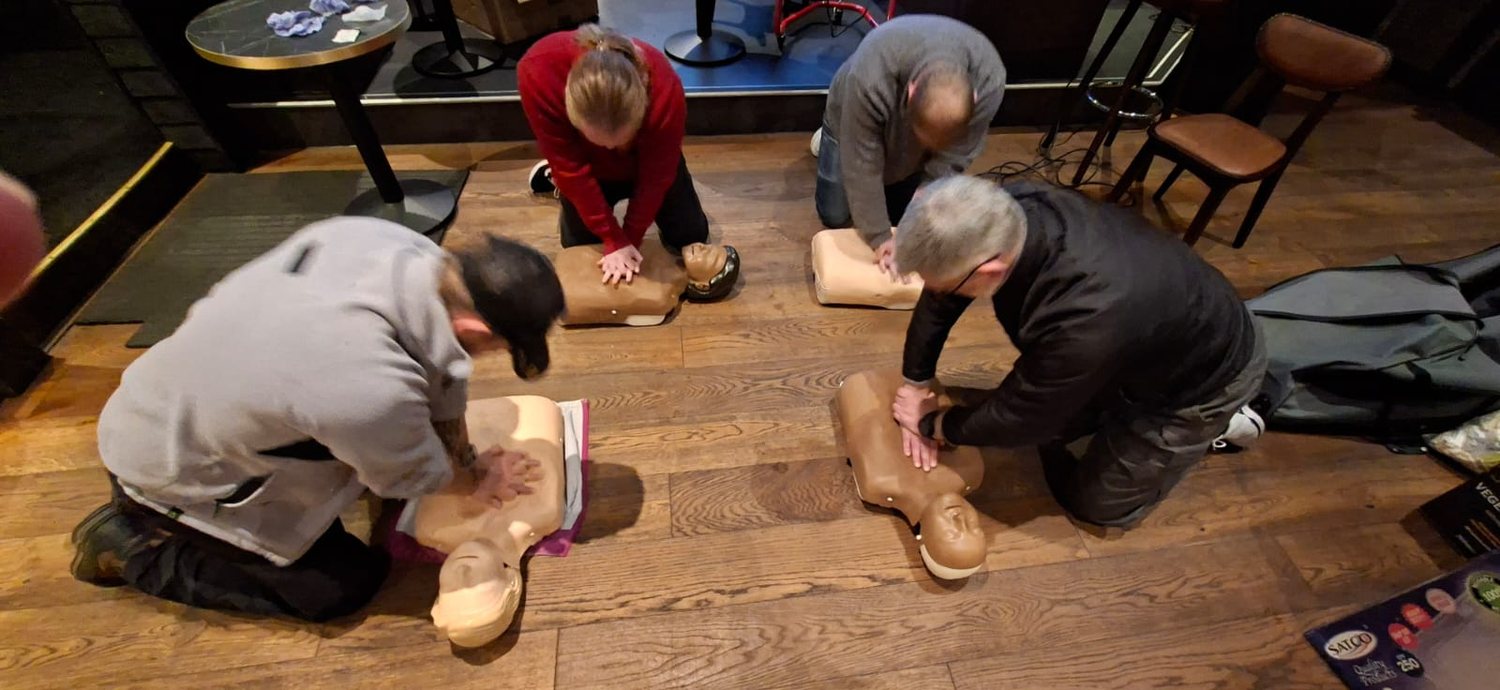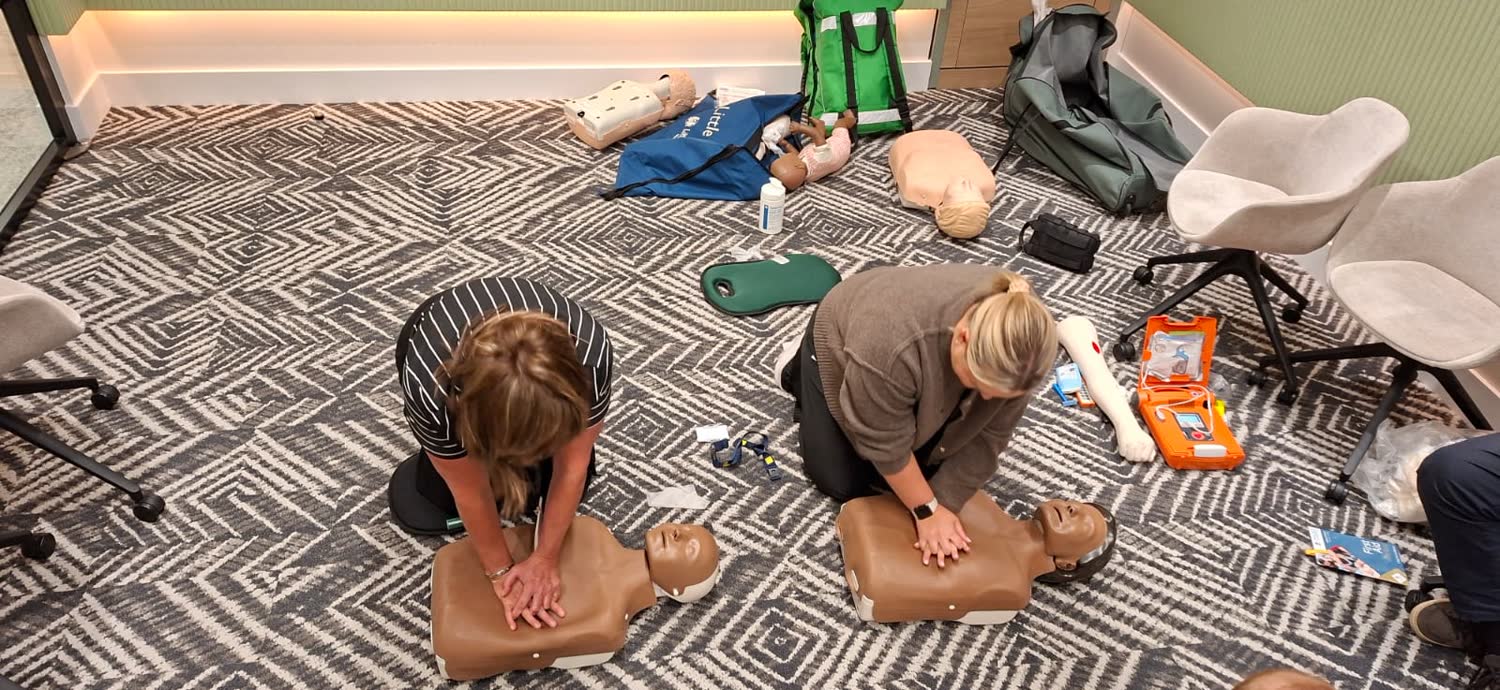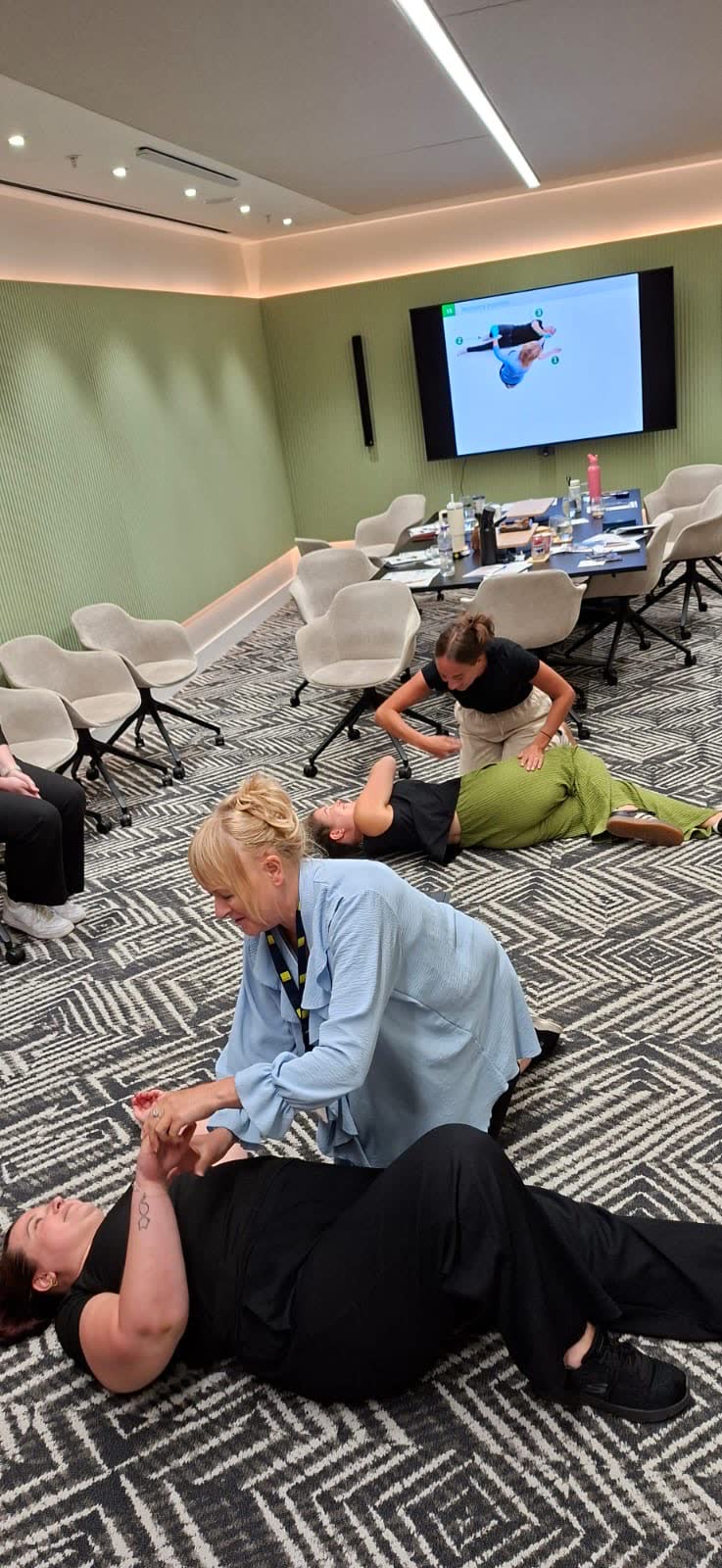
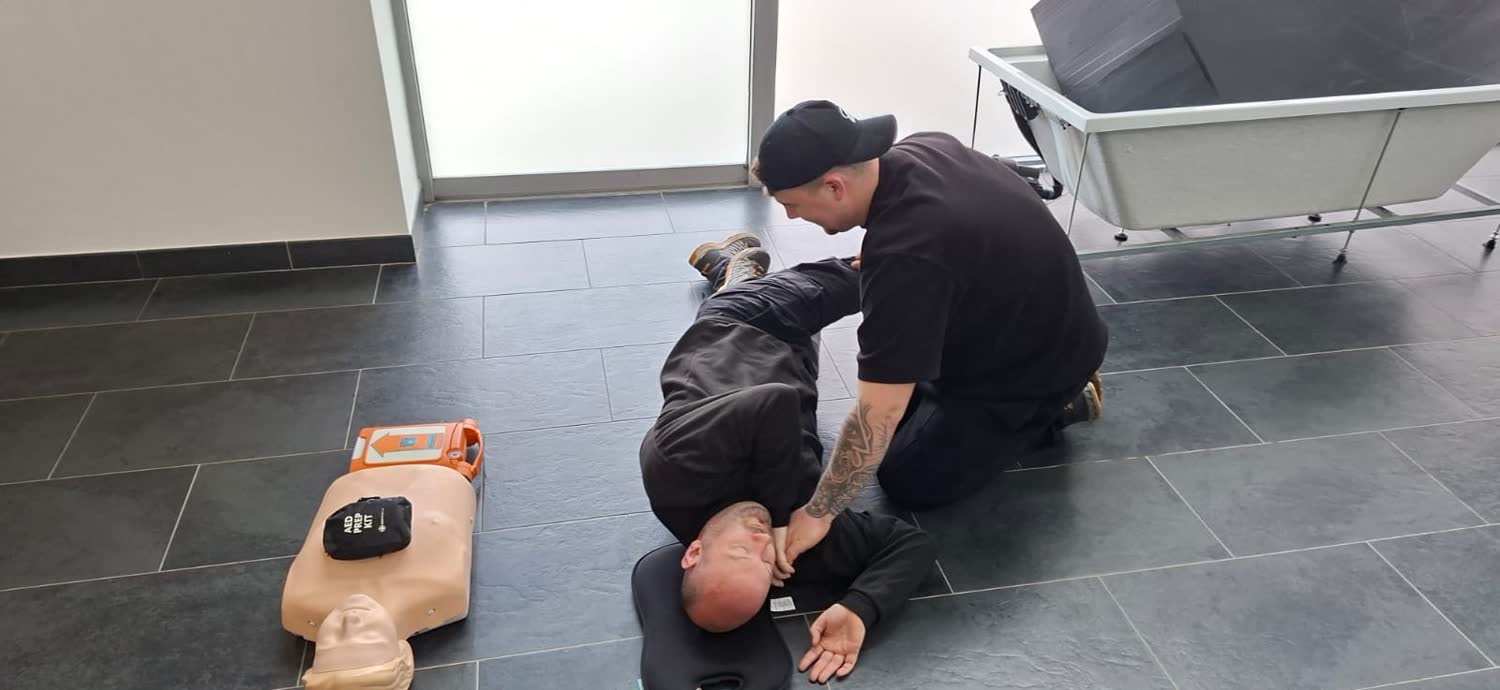
The short version. Emergency First Aid at Work (EFAW) is one day and teaches someone to deal with an emergency until help arrives. First Aid at Work (FAW) is three days and adds a much wider range of injuries and illnesses on top.
Both certificates last three years. Both are recognised across the UK. The question is which one your first aid needs assessment points to.
What EFAW covers
One day, around six hours. It gets someone competent at the things that kill people quickly:
- The role of the first aider and the priorities at a scene
- An unresponsive casualty, breathing and not breathing
- CPR and defibrillator use
- Choking
- Serious bleeding
- Shock
- Seizures
- Recording and reporting
For a low risk office where the realistic emergencies are a collapse or a choking incident, that is often the right level.
What FAW adds
Three days, around eighteen hours. Everything above, plus the injuries and conditions you get in a workplace where things move, fall, burn or crush:
- Fractures and suspected spinal injuries
- Head injuries
- Chest injuries
- Burns and scalds
- Eye injuries
- Poisoning
- Anaphylaxis
- Diabetic emergencies, asthma attacks, heart attacks and strokes
- Sudden illness more broadly
If your people work with machinery, at height, with vehicles, with chemicals, or in a kitchen, this is the level that matches what could actually happen to them.
How to choose without guessing
Work backwards from the injuries that are realistic in your workplace, not from the price or the length of the course.
- 1. List what has actually happened on site in the last few years
- 2. List what could happen given the equipment and the work
- 3. Ask whether EFAW would leave your first aider standing there unable to help
- 4. If the answer is yes for any realistic scenario, you need FAW
A one day certificate that does not cover the injury in front of you is not a saving.
Mixing the two
Plenty of employers do, and it is usually the sensible answer for a larger site. A core of FAW trained first aiders, with EFAW trained staff spread across shifts and departments so there is always somebody within reach. It gives you depth of cover without putting everybody through three days.
Requalification is shorter, but only if you are in date
FAW requalification is two days rather than three. EFAW requalification is one day. Both have to be completed before the existing certificate expires. Let it run out and you are back to the full course.
Paediatric is a separate qualification
If you work with children, in a nursery, school, or as a childminder, neither of these is the right course. Paediatric First Aid is its own qualification with different content and different ratios, and in early years settings it is often a statutory requirement rather than a judgement call.
Still not sure?
Tell us what the work involves and how many people you have, and we will tell you honestly which course fits. We would rather put you on the one day course and have you come back than sell you three days you did not need.